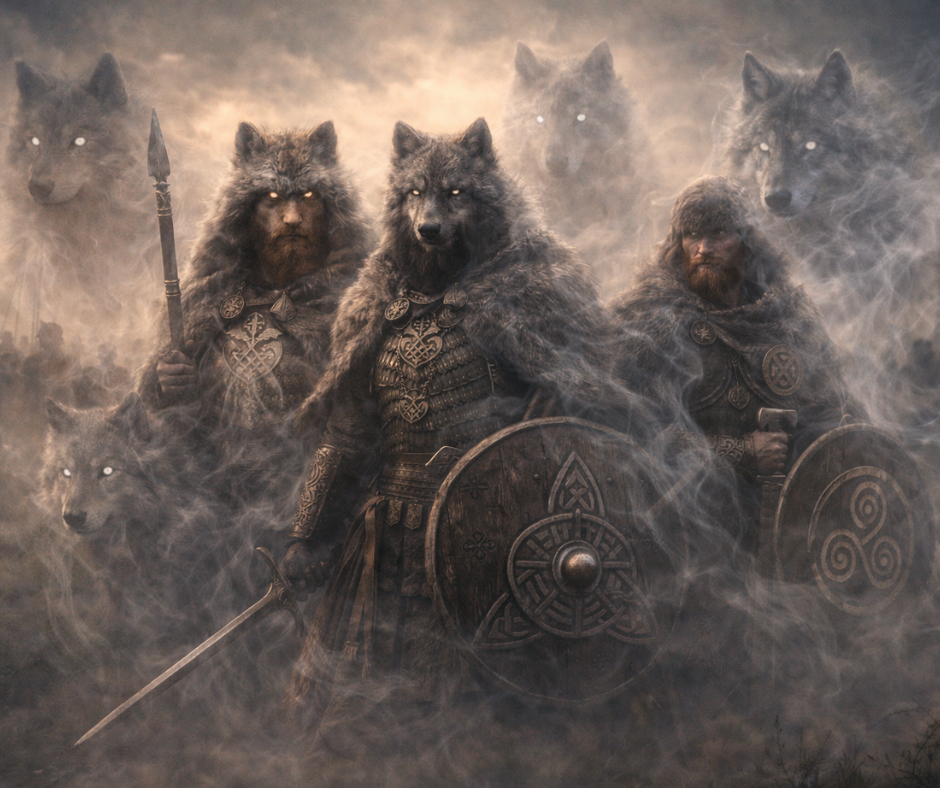
The Vampire Was Always Family: Sinners, Abhartach, and Why This Story Hit Home
- Heather Bradley
- Dec 30, 2025
- 3 min read


I’ll admit it right out of the gate: I love vampires—but not the seductive kind. I’m drawn to the old ones. The kind that don’t bother with charm because they don’t need it. They don’t whisper promises from velvet shadows or wait to be invited across a threshold. They take because they believe they’re owed—by blood, by land, by history. These are the vampires that folklore remembers.
Their hunger isn’t romantic. It’s administrative. It’s the cold certainty of entitlement.
These vampires don’t want your affection.They want your compliance.
They aren’t interested in seduction because seduction implies choice. What they offer instead is inevitability. A system. A debt passed down through generations, dressed up as tradition or survival or the way things have always been done.
Which is why Sinners (2025) didn’t just entertain me.It stirred something older. Something buried.
An Irish vampire dropped squarely into Mississippi soil.
For a weird kid like me, with one foot in Irish folklore and the other planted deep in the haunts of Mississippi… the collision felt personal.
It was the kind of story you don’t just watch—you follow.
Now, in Irish folklore, Abhartach wasn’t a mysterious outsider. He wasn’t even foreign or glamorous. He was a local chieftain. A man the people knew and feared. After he died, he clawed his way back out of the earth and demanded blood tribute from the very people he’d terrorized in life.
That’s the difference. Abhartach doesn’t do romance—he takes.
And the screenwriters, actors, and directors of Sinners understand this in their bones.
Remmick doesn’t see himself as a monster (What monster does?). He sees himself as a ruler. A patriarch. A man owed loyalty, devotion… and blood. And he collects that tribute in ways far more insidious than fangs.
One of the film’s smartest—and most unsettling—choices is how Remmick uses music as a trojan horse. Afterall, in Mississippi, music has always been survival. The blues, gospel, and jazz were born from slavery and repression—songs forged to carry grief, resistance, memory, and hope when nothing else was safe to carry. Sinners understands that history, and that’s exactly why music becomes the vampire’s trump card.
Remmick sings old Irish ballads of struggle and wandering roads, of hardship and belonging. He frames himself as kin. As someone who understands pain. He leans into the “home-grown” feel of the myth to lower everyone’s guard—to make the monster feel familiar.
But folklore teaches us to listen closely.
Because songs can be spells.And not all spells are meant to heal.
These are old songs, doing very old work—turning shared suffering into access, memory into invitation, and music into a doorway.
Yep... Old songs and Older tricks.
In Sinners, musicians’ voices are keys. Bridges between worlds. Remmick hunts them because culture, memory, and song feed him. Hoodoo becomes the anchor—protecting not just bodies, but stories. Lineage. Soul.
Sinners reminds us of something folklore has always known:
The monster isn’t always a stranger.Sometimes he sings your songs.Sometimes he shares your grief.Sometimes he claims your history.
And sometimes the only way to defeat himis to remember who you are.
If this thread of folklore, music, and ancestral resistance pulls at you the way it pulled at me, I explore it more deeply on my new podcast Tales from Cranewitch Hollow—where I dig into Abhartach, weaponized ballads, and why some vampires are really just colonial ghosts that refuse to stay buried.
Because the dead don’t always rest.And neither do the stories.
—Until next time: stay curious, stay rooted, and as always stay wyrd. 🖤